How to Choose the Right Video Editing Agency for Your Business
 By Techspeak Team
November 6, 2026
10 min read
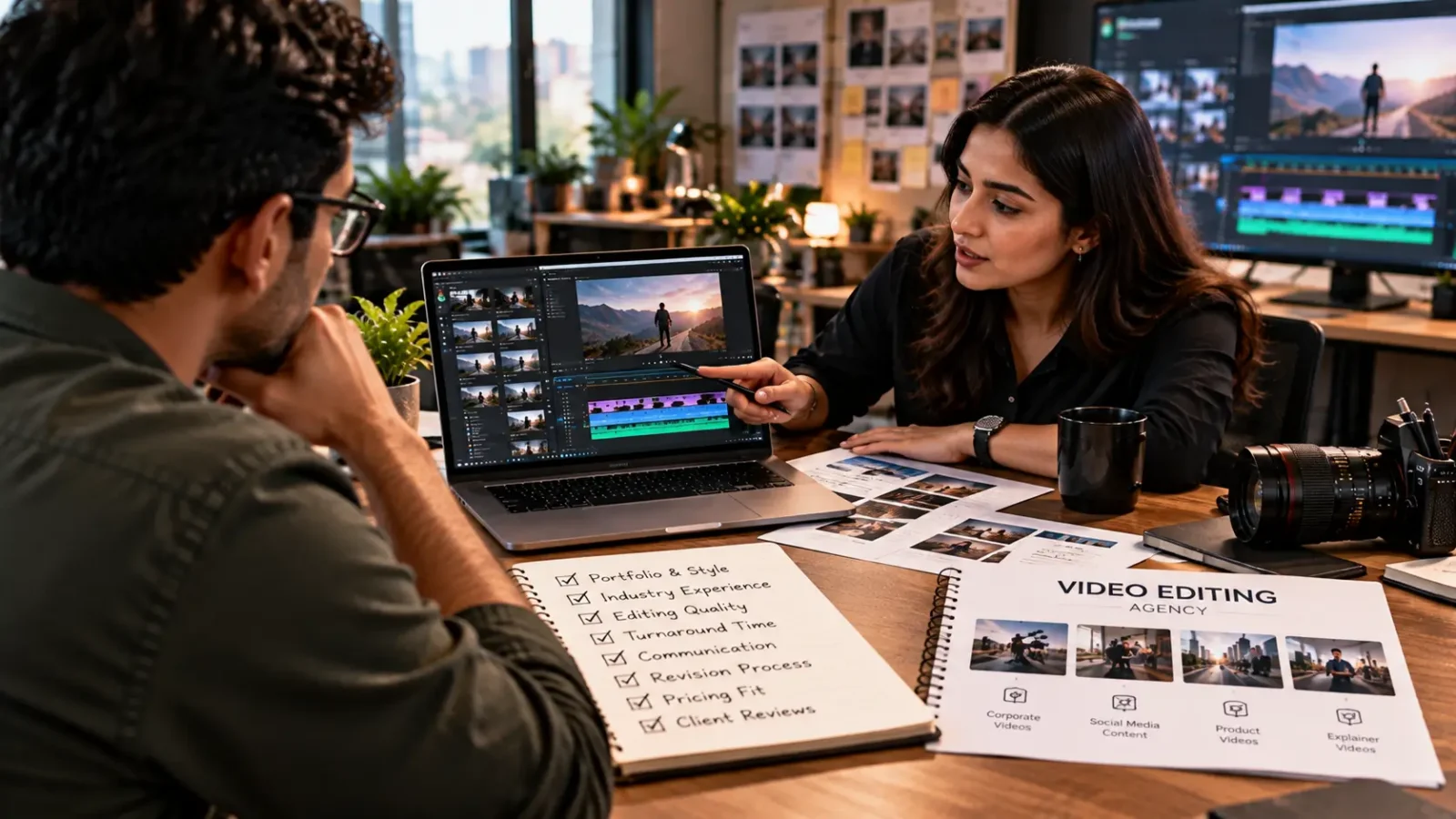
To choose a video editing agency, start by defining your video requirements, then shortlist agencies whose portfolios match your type of content. Compare them on workflow, revision policy, turnaround, capacity, communication, pricing and contract terms, and run a small paid trial before committing to a retainer. There is no single “best” video editing company for everyone. The best one is the one that fits your content, volume, budget and way of working.
Deciding to hire a video editing agency is easier to get wrong than it looks. Portfolios show a polished end result, not the process behind it, and a low quote can hide limited revisions, slow turnaround or extra fees. This guide gives you a practical way to evaluate agencies: what to define first, what to look for in a portfolio, what to ask about process, how to compare proposals fairly, which red flags to watch for, and a scorecard you can use immediately.
Start with your actual video requirements
Before contacting any video editing company, write down what you need. Agencies can only quote and perform well when the brief is clear.
- Purpose: what each video should achieve (awareness, sales, training, support)
- Video types: webinars, podcasts, demos, testimonials, short-form clips, brand videos
- Volume: how many videos per month, and how steady that number is
- Formats: platforms and aspect ratios you need
- Source footage: how much raw material you have and its quality
- Style: two or three example videos you like, and any brand guidelines
- Turnaround: your usual and your urgent deadlines
- Review process: who gives feedback and who approves
- Budget range: a realistic range, or at least how you plan to budget
If you are unsure what to include, our guide to what drives video editing costs lists the factors that affect quotes.
What to look for in a portfolio
A portfolio is evidence, but it needs to be read carefully.
- Relevance: look for work similar to yours in format, industry and complexity. A beautiful brand film does not prove an agency can handle weekly webinar edits.
- Range and consistency: check whether the quality is consistent across projects, not just one standout piece.
- Pacing and clarity: watch for clear openings, tight pacing, clean audio and readable captions.
- Platform fit: see whether examples are properly formatted for the platforms where they were published.
- Recent work: confirm the samples are recent and that the same team still does this work.
- Results context: ask what the video was for and how it performed, where the client allows sharing that.
Ask who actually edited each sample. Some samples are produced by people who no longer work there or by a different team than the one assigned to you.
Questions about workflow and revisions
Process matters as much as talent. Ask:
- What happens between sending footage and receiving the first cut?
- Who will edit my videos, and will it be the same person each time?
- How many revision rounds are included, and what counts as a revision rather than a new request?
- How do you collect feedback: shared documents, comments on the video, calls?
- How do you handle conflicting feedback from several people on my team?
- What do you need from us to start, such as brand assets, scripts and raw files?
- What is your quality review process before delivery?
A clear, simple answer to these is a good sign. Vague answers often mean the process is improvised.
Turnaround and capacity
Speed and reliability are different. Ask:
- What is your standard turnaround for my type of video?
- What is the rush option, and what does it cost?
- How many videos can you handle for us each month without quality dropping?
- What happens if you are busy or a team member is unavailable?
- How do you handle a spike in volume, such as a launch or an event?
Get turnaround commitments in writing rather than relying on a verbal estimate.
Communication and project management
Many agency problems are communication problems.
- A named contact who responds within an agreed window
- A clear way to send files and feedback, with version tracking
- Time-zone fit: check overlap hours if the agency is in another country, and how handovers work
- Language and clarity: make sure you can explain what you want and understand their updates
- Status visibility: know where each video is in the process without chasing
Pricing and contracts
Compare what you are actually buying, not only the number.
- Pricing model: per video, per minute, package or monthly retainer, and what each includes
- Inclusions: revisions, captions, music, stock footage, graphics and extra formats
- Extra charges: rush delivery, additional revisions, scope changes, file storage
- Payment terms: deposit, schedule and cancellation rules
- Ownership and files: who owns the final videos and, importantly, whether you receive project files
- Licensing: music, stock footage and fonts, and any usage limits
- Confidentiality: whether the agency will sign an NDA if your footage is sensitive
- Termination: how you can end the relationship and what happens to work in progress
This is general guidance, not legal advice. For larger or long-term engagements, have the contract reviewed by someone qualified.
Project-based vs monthly retainer
| Project-based | Monthly retainer | |
| Best for | One-off or occasional videos | Regular, ongoing output |
| Predictability | Cost is known per project | Cost is steady each month |
| Flexibility | High: you pay only when you need work | Lower: you commit to a volume or hours |
| Agency familiarity with your brand | Rebuilt for each project | Builds up over time |
| Watch out for | Scope creep and rising per-project costs | Unused capacity and unclear rollover rules |
If you are still deciding whether to use an agency at all, read In-House Video Editor vs Agency: Which Is Better for Your Business?
Run a small trial first
Before signing a long retainer, consider a paid pilot:
- Choose one representative video, ideally a real one you will publish.
- Give a clear brief and the same assets you would send normally.
- Agree the scope, turnaround and revision rounds in advance.
- Judge the result on quality, communication, speed and how the agency handled feedback.
- Decide whether to continue, adjust or move on.
A pilot costs little compared with the cost of a bad long-term choice.
How to compare agency proposals
Put proposals side by side on the same scope. A simple comparison covers:
| Item | Agency A | Agency B | Agency C |
| Scope covered (videos, length, formats) | |||
| Pricing model and total cost | |||
| Revisions included | |||
| Standard turnaround | |||
| Portfolio relevance | |||
| Who will edit | |||
| Communication process | |||
| Ownership and project files | |||
| Extras (captions, music, graphics) | |||
| Contract terms |
Be cautious about unusually low prices. They may leave out revisions, formats or quality checks that other quotes include.
Red flags and green flags
Red flags
- Vague answers about process, revisions or who will do the work
- No relevant examples, or samples they cannot explain
- Pressure to sign quickly or pay everything upfront
- A price far below others without a clear reason
- Refusing to share project files or being unclear about ownership
- No named contact, or slow responses before you have even signed
- Promises of guaranteed results from a video
Green flags
- Clear scope, price and revision terms in writing
- Relevant work and honest explanations of how it was made
- Questions about your goals and audience, not just your deadline
- A defined process and a named point of contact
- Willingness to do a small pilot
- Realistic claims about what editing can and cannot do
Video editing agency checklist and scorecard
Use this checklist when you meet each agency, and score them from 1 (poor) to 5 (excellent). Adjust the weights to what matters most to you.
| Criteria | What to check | Suggested weight | Score (1–5) |
| Portfolio relevance | Work similar to yours, recent and consistent | High | |
| Process and revisions | Clear workflow, defined revision rounds | High | |
| Turnaround and capacity | Written timelines, ability to scale | High | |
| Communication | Named contact, responsiveness, feedback tools | High | |
| Team and continuity | Who edits, and what if they are unavailable | Medium | |
| Pricing clarity | Inclusions, extras and payment terms are clear | Medium | |
| Ownership and files | You receive final and project files | Medium | |
| Brand understanding | Questions about your goals, audience and style | Medium | |
| Flexibility | Willing to pilot, adjust scope, scale up or down | Medium | |
| Confidentiality and contract | NDA available, fair termination terms | Lower unless footage is sensitive |
Multiply each score by your chosen weight, add them up, and compare totals, but treat the number as a guide rather than the decision. How the agency handled your questions is usually the clearest signal.
[OPTIONAL: add a short note on how TechSpeak answers these criteria in practice, such as its workflow, revision policy, turnaround and how files are handled. Only include what is accurate and current. Delete this line if you prefer not to.]
Where TechSpeak fits
TechSpeak’s video production services cover production and editing for businesses. Use the checklist above on us too. If you are earlier in the process, these guides may help: How Professional Video Editing Helps Businesses Get More From Their Content and How Businesses Can Turn One Long Video Into 10+ Short Videos.
Comparing video editing companies? Book a 30-minute strategy call to talk through your video requirements, and bring your checklist.
Frequently asked questions
How much does a video editing agency charge? It depends on video length, complexity, revisions, turnaround and volume, and varies by country and provider. Compare quotes on the same scope, and see our guide to video editing costs.
What should I look for in a video editing portfolio? Work similar to yours, consistent quality, clean pacing and audio, platform-ready formats and clear explanations of what the agency did on each project.
How many revisions should an agency offer? Practice varies. What matters is that the number is written down, and that the agency defines what counts as a revision versus a new request.
Should I choose a local video editing agency? Editing can usually be done remotely, so location matters less than process, communication and time-zone fit. A local team can matter more if you also need in-person filming or regular meetings.
What should be included in a video editing contract? Scope, price, revision rounds, turnaround, file and ownership terms, licensing for music and stock, confidentiality, payment terms and how either side can end the agreement. Have larger contracts reviewed by a qualified professional.
What is the best video editing agency? There is no single best video editing agency for every business. The best one is the professional video editing company whose portfolio, process, capacity and price fit your content and volume. Use the checklist and scorecard above to find it, and run a small pilot before committing.
How do I compare two video editing agencies? Use the same brief for both, compare scope and inclusions line by line, score them against the same checklist, and consider a small paid pilot with each.
Ready to choose?
Review what affects video editing cost and in-house vs agency, then use the checklist above.
Book a 30-minute strategy call with TechSpeak or contact us to talk about your video requirements.

Techspeak Team
Part of the Techspeak team, writing about SEO, GEO, local search and growth.